
In all of my "Chasing BBQ" travels, the Carolinas offered some of the most unique experiences. Whether I was in North or South Carolina, I quickly discovered that BBQ in these states is synonymous with pork; I was in hog cookin’ country!
Traveling the roads of the Carolinas, I found that most BBQ joints highlighted the flavor of smoked whole hog and served it mainly as chopped or pulled pork.
Chasing BBQ: North and South Carolina Traditions
Mike Johnston |


"BBQ in both North and South Carolina is synonymous with pork–it's hog cookin’ country! Traveling the roads of the Carolinas, I found that most BBQ joints highlighted the flavor of smoked whole hog, and served it mainly as chopped or pulled pork."
Carolina BBQ Culture & Identity
Most Carolinians believe the term barbecue specifically applies to pork, and that beef and other proteins don’t qualify as true barbecue.
While they will agree that you can enjoy “barbecued beef” or other meats “barbecued,” this doesn’t qualify as traditional BBQ. In fact, barbecue is taken so seriously in North Carolina, that their state government passed legislature to define what barbecue is. And when it comes to BBQ in the Carolinas, it’s all about pit-cooked pork. Don’t try to convince them otherwise!
There is continuous debate between South Carolina and North Carolina barbecue fanatics over who does barbecue better. In North Carolina, you’ll often find whole hog cooking. In South Carolina, they tend to focus on pork shoulders.
What they can agree on, however, is that no matter where in the Carolinas you travel, you will be greeted with delicious smoked BBQ pork.

Spices in Carolina BBQ
Spices in Carolina barbecue are simple and straightforward—they help accentuate the natural flavors in pork.
While certain spices like chili powder and mustard can be found in this region, the real flavor of smoked pork highlighted in Carolina barbecue comes from a blend of salt, pepper, and sugar (the base for almost any rub).
Because of its natural fat content, pork hold up well to bold spice rubs and heavy seasonings.
For the same reason, you’ll find many vinegar-based barbecue sauces in the Carolinas, as vinegar cuts through the fat of pork to help balance out the flavors.
North and South Carolina encompass a region of BBQ that you won’t find anywhere else—and sure is hard to replicate. Below are the cuts of meat and spices inspired by the Carolina leg of my "Chasing BBQ" road trip.


Whole Hog Cookin'
Whole hog cooking is a style of barbecue unique to the Carolinas—they pride themselves on this unique regional technique.
To clear up any misconceptions, whole hog cooking isn’t necessarily the best way to cook pork. Considering that certain muscles of the hog should be cooked to specific temperatures to ensure a tender product, whole hog cooking is cooked to one temperature throughout.
The result requires you to then chop or shred all the meat, slather it with sauce, and mix in some crunchy bits of skin. This will give you a massive serving of chopped or pulled pork, perfect for a large crowd or your next family gathering.
Take a look at our recipe for Carolina Whole Hog BBQ for tips on picking your pig, building your hog pit, and cooking it up! If you decided to take the leap and prepare a whole hog, below are our recommended spices for a perfect pig.
Cayenne Chile Powder: Cayenne will add a kick of heat to any dish. We suggest working dash-to-dash; in other words, add a dash and taste, then repeat until you have the heat level you desire. Cayenne is a great addition to BBQ rubs, as it will add noticeable heat but won’t overpower.
Granulated Onion: Onion is used in numerous BBQ rubs across many different regions and styles. The base flavor of onion helps provide a springboard for other flavors to come through.
Garlic Salt: The addition of salt to granulated garlic helps to accentuate the garlic flavor, making it more pronounced on your taste buds. Salt is often referred to as the “policeman” of your taste buds, making sure every flavor is properly represented.
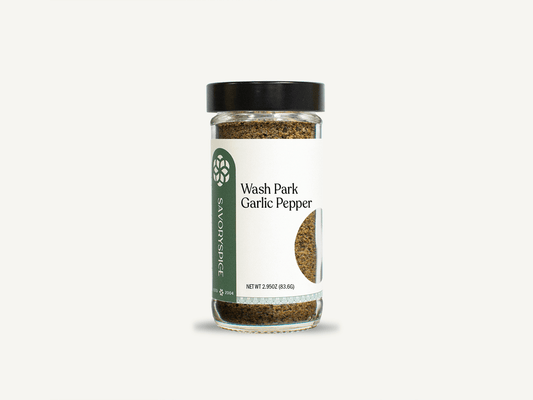
Wash Park Garlic Pepper: This great all-purpose blend can be used in numerous applications, both as a sprinkle on seasoning and as a meat or vegetable rub. This is a wonderful blend to use as a base to create your DIY homemade BBQ rub.
Carolina Whole Hog BBQ
Recipe by Mike Johnston, Savory Spice founder
'Cue in the Carolinas is all about pork. Typically Carolina BBQ refers to a whole hog that's been smoked and then...
 Grilling & BBQ
Yields
1 serving per pound of hog


Chopped Pork vs. Pulled Pork
When you hear the term chopped pork, you might think, “Isn’t chopped pork just another term for pulled pork?” If you’ve thought this before, it’s ok, we’re here to help.
The biggest difference between chopped and pulled pork is in how the meat is prepared before it is either plated or put on a sandwich. Pulled pork has the meat “pulled” apart, resulting in long strings of pork meat. Often times pulled pork will come as a result of cooking pork shoulder or pork butt on its own.
Chopped pork on the other hand is normally chopped with a large cleaver or butcher’s knife, which gives the pork smaller cuts, perfect for getting ready to be slathered in BBQ sauce. Chopped pork is normally the product of whole hog cooking, as the meat is separated from the hog and then chopped together. In chopped pork, you will often find crunchy pieces of skin from the whole hog cooking process, providing exceptional texture and mouthfeel.
Try using any of the spices below to ramp up your chopped pork:
Crushed Red Pepper Flakes: These chiles are about a 3 to 4 on a heat scale of 1 to 10. Red pepper flakes are not made of one type of chile, but from various combinations of ancho, bell, cayenne and more. Crushed red pepper is often referred to as "pizza pepper," despite its ability to be used in numerous applications.
Regular Yellow Mustard Powder: This pure yellow mustard powder is the ground product of the seeds from a large bush native to Asia. Mustard powder can be used to make a simple mustard by simply mixing 1 cup mustard powder, 3 fluid ounces of water, and 3 fluid ounces of vinegar.
Celery Salt: Although a simple blend, celery salt is just as essential in your kitchen as garlic and onion salt. Celery, which is a member of the same family as carrots, parsley and caraway, can overpower a dish so use care when using this blend. Celery salt can be used in place of salt, providing an amped up flavor profile than typical salt.
Western Carolina BBQ Rub: Our only Carolina-influenced BBQ rub, this blend is modeled after a traditional Western North Carolina barbecue rub. This blend uses a base of salt, sugar, and paprika with a slight smoky flavor from Ancho chile powder. We’ve created a version that represents its tradition while adding a Savory twist.


Previous article
Previous Article
The Savory Spice Journal: My No Waste Sourdough Journey
Next article
Next Article
Chasing BBQ: Alabama & Georgia Traditions
Leave a comment
Join our community
Join our email list and Loyalty Club to earn points and save 10% on your first order!